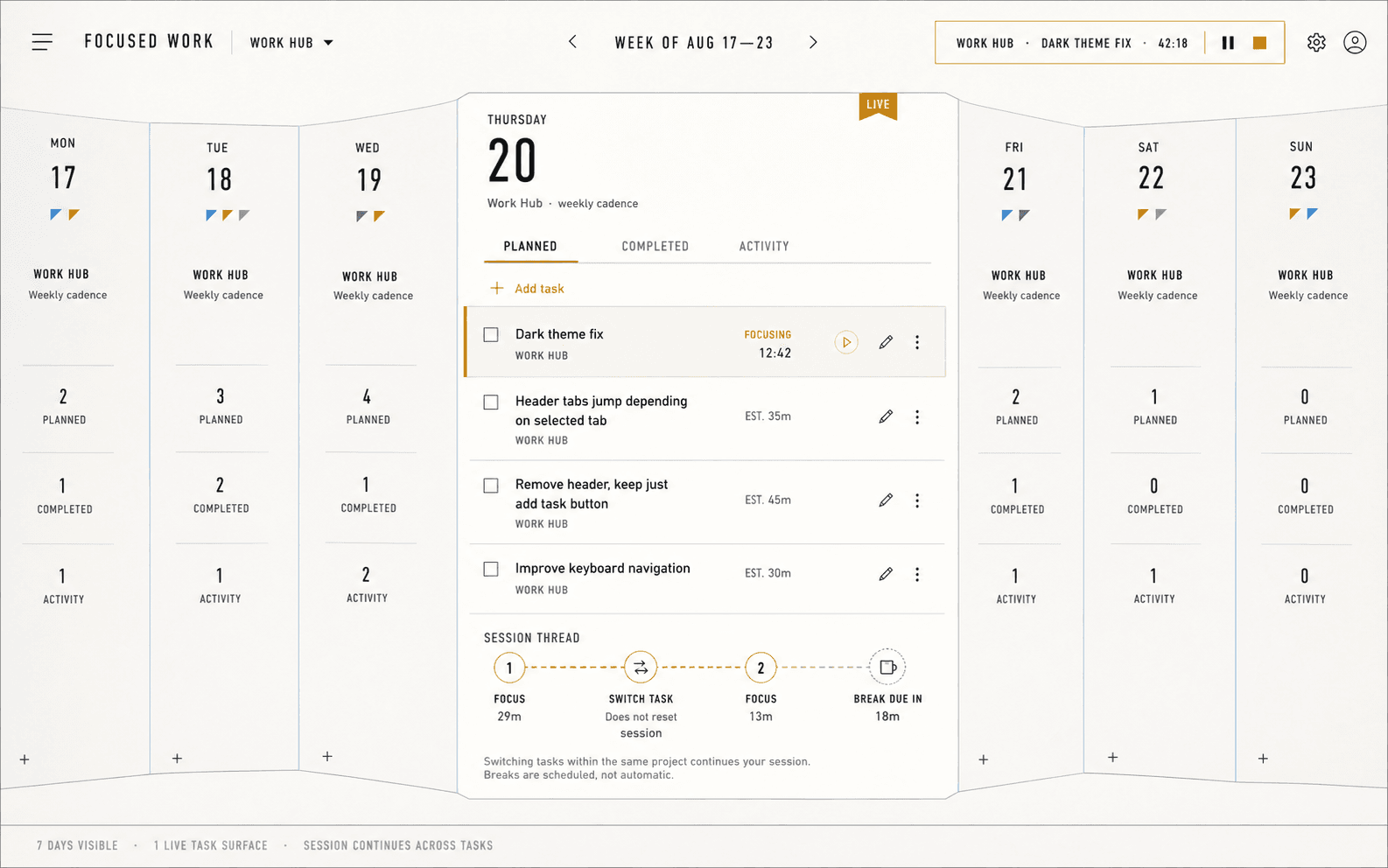
Choose projects before tasks
Begin the week by deciding which projects truly need protected attention. Giving every project equal space usually creates a crowded plan that collapses as soon as something changes.
A cadence can reserve two or three natural project days while leaving deliberate room for delivery, communication, and recovery.
Define the next visible outcome
Write tasks that can be resumed after interruption: produce the first proposal outline, test the migration on a fixture, review the three blocking screens. The title should tell your future self where to begin.
Schedule the action on the day you intend to protect it. Keep other ideas unscheduled until they become actual commitments.
Use review to change the system
Review focused time, completed tasks, and project allocation as facts. If the planned cadence and actual attention diverge, change the next week rather than judging the previous one.
Useful recommendations are transparent: a project exceeded its chosen focus budget, an overdue task needs a new date, or one project received most of the week's focus. No opaque productivity score is required.