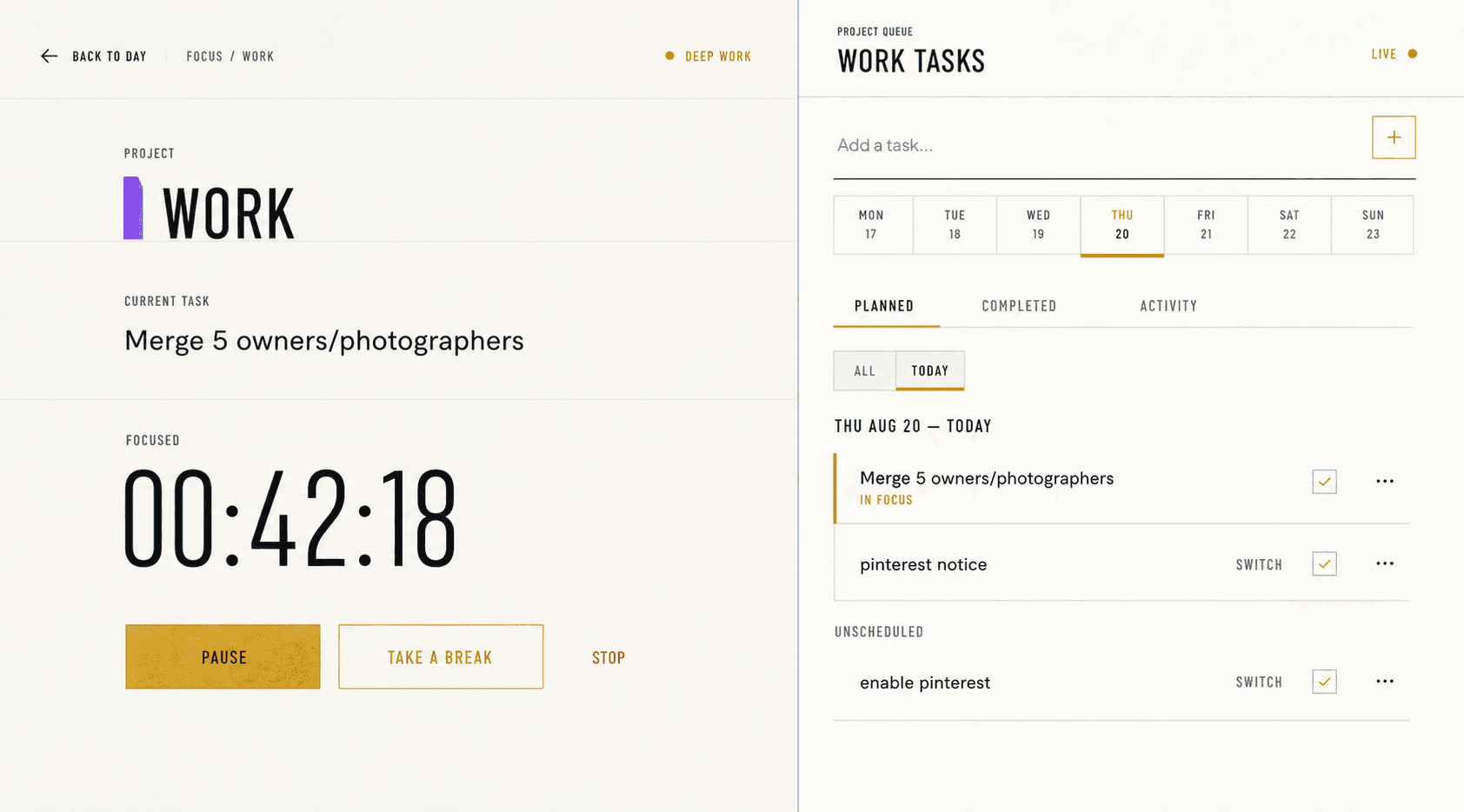
A timer should remember what the time was for.
A countdown can protect a short interval, but it cannot explain what moved forward. A task-linked focus session preserves the project, the next action, and the recorded duration as one piece of work.
- Real source
- Start from an existing project or task so the session never becomes an anonymous timer entry.
- Visible queue
- Keep nearby work available while focusing; switching a task should not erase the accumulated session.
- Distinct rest
- A recovery interval is visually and semantically different from active focus while the task queue remains ready.
Choose the smallest meaningful action
Select a task that can move in one uninterrupted block. If the title is too broad—build website, improve product, handle marketing—rewrite it as the next observable outcome.
The timer then becomes a boundary around work that already has meaning instead of a ritual performed before deciding what to do.
Keep lifecycle state truthful
Start, rest, resume, switch, and stop are different events. The interface should show the current state clearly without fabricated idle values or animated digits that distract from the task.
A break does not pause the project itself. It records recovery time while keeping the working context available for a deliberate resume or stop.
Review attention with the task
When a session ends, focused time belongs to the project and task that received it. That record makes weekly review useful: completed work and focused work can be compared without guessing.
For client work, a billable decision can be captured when the session begins so later reports preserve the original reporting context.